



Why Quick Furnace Troubleshooting Can Save Your Sunrise Beach Winter
Furnace troubleshooting sunrise mo becomes critical when Missouri’s cold winters hit and your heating system fails. Nothing’s worse than waking up to a freezing home when temperatures drop below freezing around Lake of the Ozarks.
Quick Furnace Troubleshooting Steps for Sunrise Beach Homeowners:
- Check your thermostat – Verify settings, replace batteries, and ensure it’s set to “heat.”
- Inspect the air filter – Replace if dirty or clogged, as this restricts airflow.
- Examine the furnace power – Check the power switch and circuit breaker.
- Look for obvious issues – Look for blocked vents, a tripped reset button, or pilot light problems.
- Test basic components – A clean flame sensor, a working sail switch, and a verified gas supply are key.
- Know when to stop – Call professionals for gas leaks, electrical issues, or complex repairs.
Many furnace problems in Sunrise Beach are simple, like dirty filters or thermostat issues. However, as furnaces age (typically lasting 10-15 years), more complex problems can arise. It’s key to know which issues you can handle and when to call a professional. For your safety, leave gas leaks, electrical hazards, and carbon monoxide risks to the factory-trained technicians at Baker Air Conditioning & Heating.
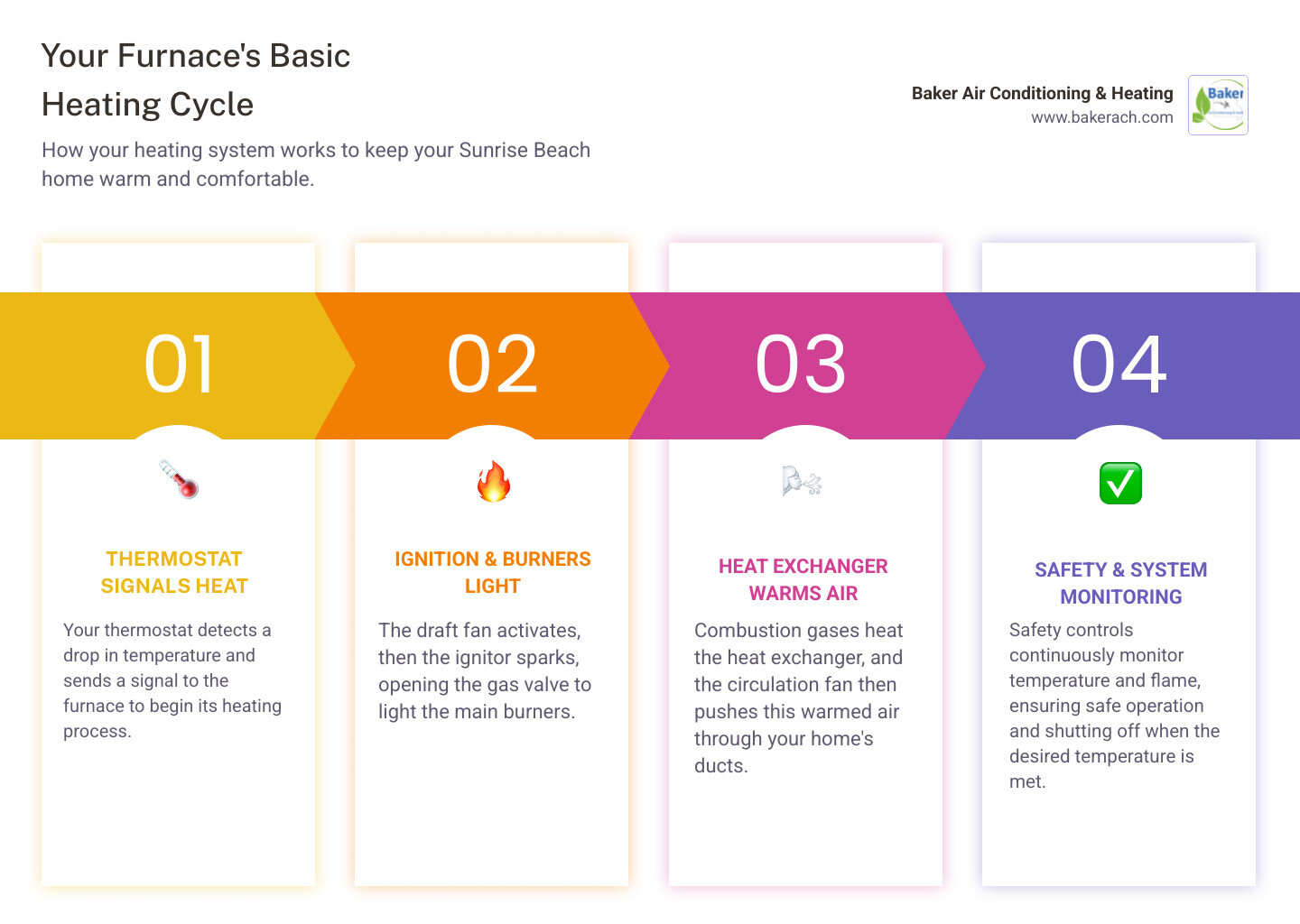
Common Furnace Warning Signs in Sunrise Beach
Your furnace often gives warning signs before it fails completely. Recognizing these signs can help you avoid an emergency repair and keep your Sunrise Beach home warm. Here are some of the most common red flags:
- Uneven heating throughout your home suggests your furnace is struggling to distribute air, possibly due to ductwork issues.
- Strange noises coming from your furnace often indicate mechanical problems, which we’ll cover in a moment.
- Increased energy bills without a change in your habits often mean your furnace is losing efficiency.
- A yellow pilot light (it should be blue) is a serious safety concern that could indicate a carbon monoxide risk.
- Poor air quality, such as excessive dust or strange odors, can point to furnace issues.
- Moisture or leaks around your unit indicate an internal problem needing professional repair.
- Frequent cycling (the furnace turning on and off repeatedly) signals a problem.
- The system won’t turn on at all, which is the most obvious sign of trouble.
Most furnaces work efficiently for about 10-15 years before they start showing their age. Recognizing these warning signs early can help you decide if simple maintenance will solve the problem or if it’s time to consider a replacement.
For more information about keeping your heating system running smoothly, check out our comprehensive HVAC services in the Sunrise Beach area.
Your Furnace is Constantly Cycling
Short cycling is when your furnace repeatedly turns on and off without completing a full heating cycle. This puts immense stress on components, shortening the furnace’s lifespan and raising energy bills. Common causes include:
- Thermostat issues: A malfunctioning or poorly placed thermostat can send incorrect signals to your furnace.
- Clogged filter: A dirty air filter is a primary cause. It restricts airflow, causing the furnace to overheat and shut down prematurely.
- Airflow restrictions: Other blockages, like closed registers or crushed ductwork, can cause the same overheating issue.
- Oversized furnace: A system that’s too large for your home will heat the space too quickly, leading to short cycles.
- Furnace age: As furnaces pass the 10-15 year mark, they become more prone to short cycling due to worn components.
You Notice Strange Noises or Smells
Unusual noises or smells from your furnace are clear indicators of a problem. Pay attention if you notice any of the following:
- Banging or popping sounds often point to delayed ignition, where gas builds up before lighting.
- Squealing or grinding noises usually indicate worn motor bearings, which can lead to motor failure if ignored.
- Rattling can be caused by loose panels, debris, or an unbalanced blower wheel.
- Excessive clicking often points to a failing ignitor or flame sensor.
When it comes to smells, a burning dust odor is normal when you first turn on your furnace for the season and should dissipate quickly. However, metallic smells suggest overheating electrical parts and require immediate attention.
The most critical odor is the rotten egg smell of a gas leak. Natural gas is odorless, so utility companies add a chemical called mercaptan to give it a distinct sulfur smell. If you ever detect this odor, leave your home immediately, avoid using any electrical switches or phones inside, and call your gas company and 911 from a safe location.
For more helpful tips on maintaining your HVAC system, be sure to read our HVAC blog where we share practical advice for Sunrise Beach homeowners.
DIY Furnace Troubleshooting in Sunrise Beach, MO: A Step-by-Step Guide
When your furnace acts up, don’t panic. Many issues have simple fixes you can safely perform yourself. This systematic guide will help you diagnose the problem. However, always prioritize safety: if you smell gas, suspect an electrical problem, or feel unsure, stop and call a professional.
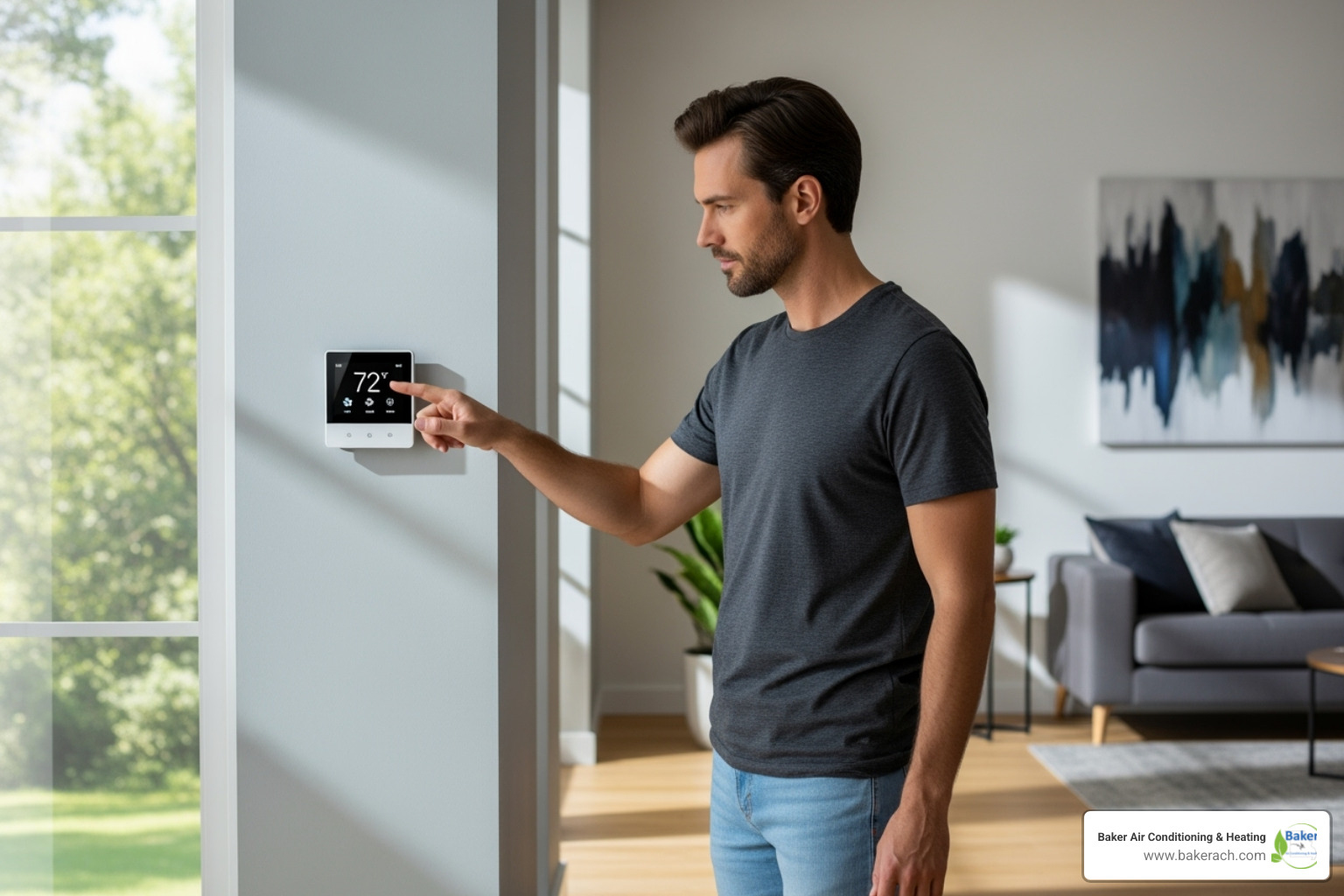
Step 1: Check the Thermostat
Often, a furnace problem is just a thermostat issue. It’s the command center of your heating system, so start your checks here.
- Verify Settings: First, confirm it’s set to “Heat” and the temperature is set higher than the current room temperature.
- Check Programming: Review your programmable thermostat’s schedule for any incorrect “away” settings.
- Replace Batteries: A blank or dim display usually means the batteries are dead. Try swapping in a fresh pair.
- Inspect Wiring: If you’re comfortable after turning off the power at the breaker, you can check for loose wires behind the thermostat cover.
Starting with the thermostat can quickly solve the problem or give you valuable clues for further investigation.
Step 2: Inspect the Air Filter
A dirty air filter is one of the most common causes of furnace problems, but it’s also the easiest to fix. A clogged filter restricts airflow, forcing your furnace to work harder and causing it to overheat. This triggers a safety shut-off, leading to short cycling and inefficient heating.
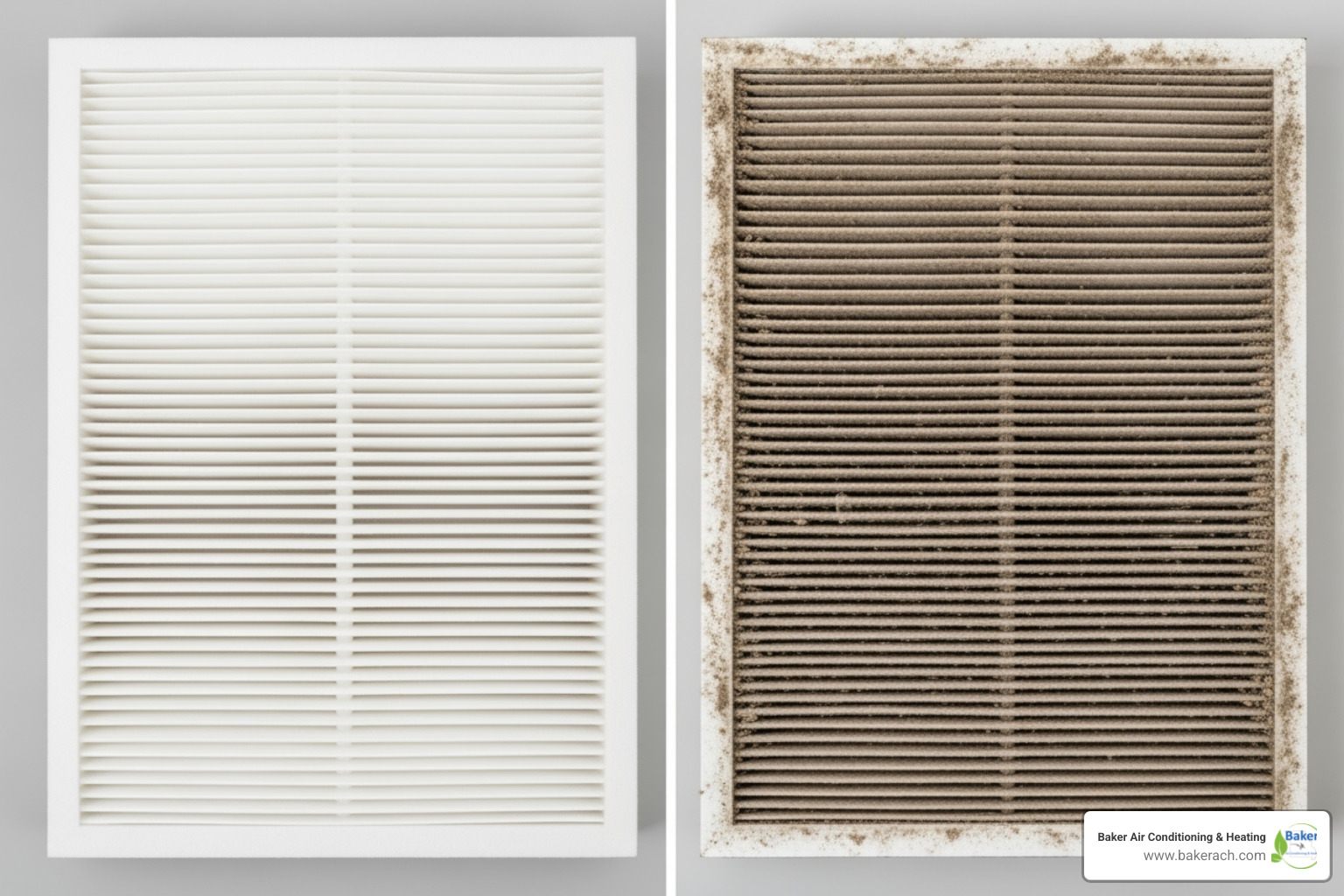
Locate the filter in the slot near the return air duct. Slide it out and hold it up to a light; if you can’t see light through it, it needs replacing. Remember to install the new filter with the airflow arrow pointing in the correct direction.
We recommend checking your filter monthly and replacing it every 1-3 months. Homes with pets or allergies may require more frequent changes.
Step 3: Examine the Furnace Itself
After checking the thermostat and filter, inspect the furnace unit itself. Always turn off the power at the circuit breaker first for safety.
- Check Power: Look for the furnace power switch (it often looks like a light switch) and ensure it’s on. Then, check the corresponding circuit breaker in your electrical panel. If a breaker is tripped, reset it once. If it trips again immediately, you have an electrical problem that needs a professional.
- Check the Pilot Light: On older gas furnaces, check the pilot light. If it’s out, follow the instructions on the unit to relight it. A yellow flame (instead of blue) is a safety hazard requiring professional service.
- Press the Reset Button: If your furnace has a reset button, you can try pressing it once. If the furnace shuts down again, there’s an underlying problem that needs to be fixed.
- Clear Vents: Ensure all supply and return air vents throughout your home are open and unobstructed. For high-efficiency furnaces, also check the exterior PVC intake and exhaust pipes for blockages from snow, ice, or debris.
For a helpful visual guide on how furnace ignition works, check out this video guide that walks through the process step by step.
Step 4: Investigate Common Component Failures
If basic checks don’t solve the problem, a component may have failed. While these repairs are best left to professionals, knowing the possibilities can help you communicate the issue.
- Ignitor Problems: Modern furnaces use electronic ignitors that can crack or wear out over time, preventing the furnace from lighting.
- Flame Sensor Issues: A dirty flame sensor can’t detect the flame, causing the furnace to shut down as a safety measure. Carefully cleaning the sensor can sometimes fix this, but it’s often a job for a pro.
- Sail Switch Issues: This safety switch ensures the blower is working before ignition. Debris can block it, preventing the furnace from starting.
- Propane System Problems: For homes with propane, a faulty regulator can cause low pressure, leading to ignition failures or cycling, even with full tanks.
When you’re dealing with gas lines or electrical components, it’s always smartest to call for professional help. For additional guidance, you can use our HVAC troubleshooting tool to help narrow down potential issues.
Preventing Repairs with Regular Maintenance and Knowing When to Replace
Proactive furnace maintenance is the best way to prevent unexpected breakdowns and costly repairs. Like a car, your furnace needs regular care to run efficiently and reliably, keeping your Sunrise Beach home warm all winter. An investment in routine maintenance pays off in comfort, safety, and lower energy bills.
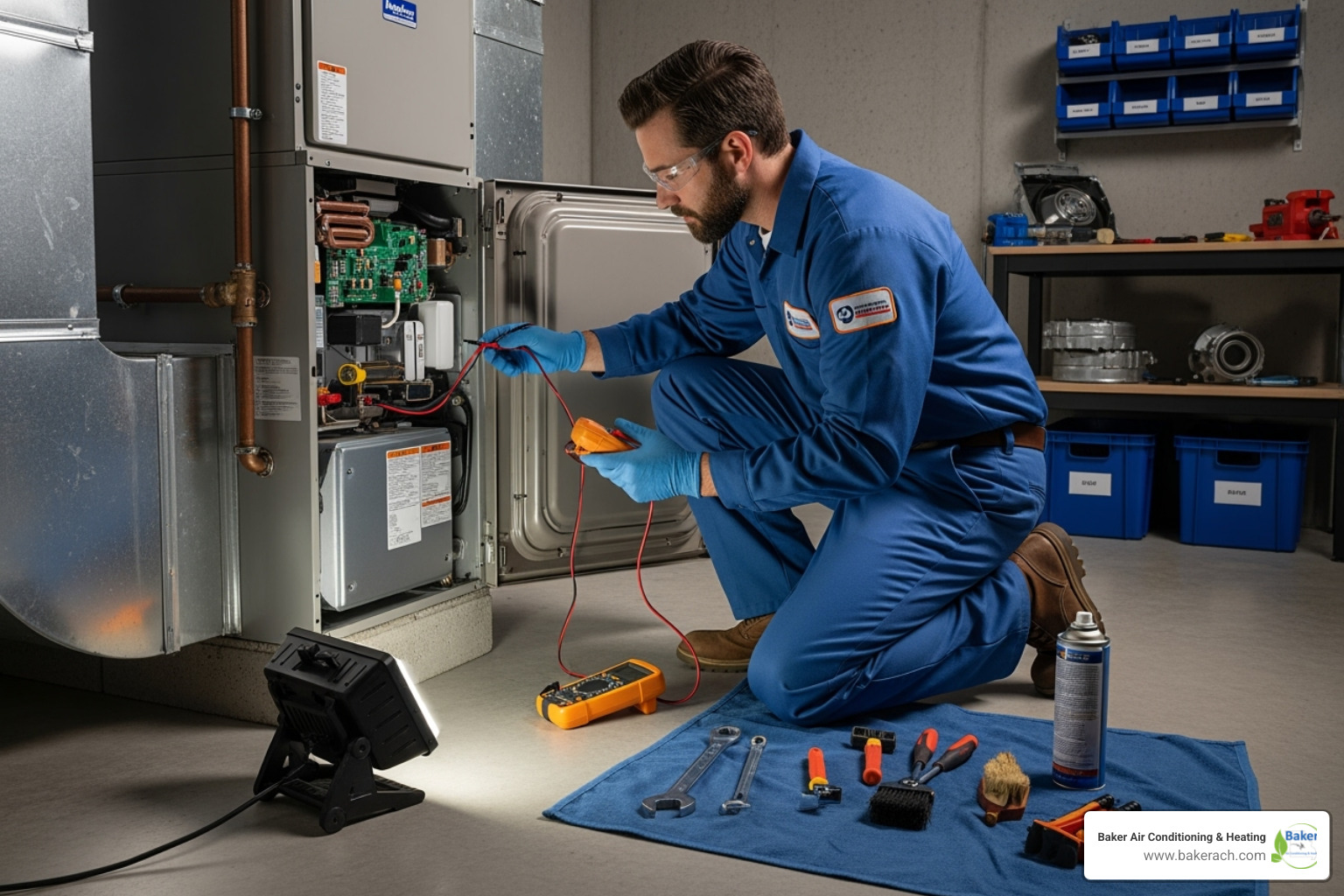
Our HVAC Maintenance Plan takes the guesswork out of furnace care, ensuring your system gets the attention it needs.
How Regular Maintenance Saves You Trouble
Annual tune-ups by a trained technician are the key to a healthy furnace. During a maintenance visit, a professional will:
- Clean Internal Components: Technicians clean crucial parts like the blower, burners, and sensors. This improves efficiency, prevents overheating, and ensures proper operation.
- Perform Safety Checks: Critically, they perform safety inspections for gas leaks, carbon monoxide risks from the heat exchanger, and secure electrical connections.
- Improve Efficiency: A well-maintained furnace runs more efficiently, lowering your utility bills and helping it last 10-15 years or longer.
- Prevent Breakdowns: Maintenance catches small issues, like a dirty sensor or a worn part, before they can cause a complete system failure on a cold night.
Signs Your Furnace Needs Replacement, Not Repair
While repairs can extend a furnace’s life, there comes a point when replacement is the more cost-effective solution. Here are signs it’s time to consider an upgrade:
- Age: If your furnace is over 15 years old, it’s likely less efficient and more prone to failure.
- Frequent Breakdowns: If you’re facing multiple repairs each winter, the costs can add up, making a new system a better investment.
- Rising Utility Bills: A steady increase in your heating costs often signals declining furnace efficiency.
- Major Component Failure: A failed heat exchanger is a critical safety hazard and an expensive repair, often making replacement the smarter choice.
- Inconsistent Temperatures: If your furnace can no longer heat your home evenly, it may be time for a more capable replacement.
When replacement becomes the smart choice, we can help you explore modern, energy-efficient options. Our Daikin HVAC systems provide reliable, efficient heating for our local climate.
The Benefits of Hiring a Licensed HVAC Professional
While some DIY troubleshooting is smart, furnaces are complex systems involving gas, electricity, and combustion. For safety and reliability, many repairs require a licensed professional. Understanding the limits of DIY can protect your home and family.
Why DIY Has Its Limits
Attempting complex furnace repairs without training is risky. Here’s why you should leave it to the pros:
- Gas Leak Risks: Improperly handling gas lines can lead to dangerous leaks, fires, or explosions.
- Electrical Hazards: Furnaces have high-voltage components that pose a risk of shock or fire if handled incorrectly.
- Carbon Monoxide Danger: A malfunctioning furnace can produce deadly, odorless carbon monoxide. Professionals have the tools to detect and prevent this.
- Voiding Warranties: DIY repairs can void your manufacturer’s warranty, leaving you to pay for future problems.
- Making Problems Worse: An incorrect DIY fix can turn a small issue into a major, expensive repair.
For homes where traditional ductwork isn’t practical, we also provide ductless HVAC services that require professional installation and maintenance.
What to Expect from a Professional Technician
When you call a professional from Baker Air Conditioning & Heating, you’re getting peace of mind. You can expect:
- Thorough Inspection: We examine the entire system to identify the root cause and prevent future issues.
- Accurate Diagnosis: Our factory-trained technicians use specialized tools and experience to diagnose the problem correctly the first time.
- Clear Explanations: We explain the problem and your repair options in easy-to-understand terms.
- Quality Parts: We use manufacturer-approved parts to ensure a lasting, reliable repair.
- Guaranteed Workmanship: Our work is backed by solid warranties, including the Daikin Comfort Promise.
- Safety First: Our technicians are trained to handle all repairs safely, protecting your home and family.
Professional furnace repair ensures your heating system is restored safely and reliably. To explore all the ways we can keep your home comfortable, check out all of Baker Air Conditioning & Heating’s services.
Your Partner for a Warm Home in Sunrise Beach
Knowing how to handle basic furnace issues provides peace of mind during a cold Missouri winter. This guide covered simple DIY troubleshooting steps—like checking the thermostat and air filter—that every Sunrise Beach homeowner can use.
We also stressed the importance of safety and knowing when to call a professional. Risks involving gas, electricity, or carbon monoxide should always be handled by an expert.
Regular maintenance is the key to preventing breakdowns, improving efficiency, and extending your furnace’s typical 10-15 year lifespan. When repairs become frequent and costly, replacement is often the smartest long-term decision.
At Baker Air Conditioning & Heating, our factory-trained technicians are committed to providing reliable service to our neighbors in the lake area. We understand the local climate and back our work with the Daikin Comfort Promise, ensuring your home remains a warm refuge when winter winds blow.
When your furnace needs professional attention, we’re just a phone call away. Contact us for professional furnace repair in Sunrise Beach, MO—because every family deserves to stay warm and comfortable all winter long.